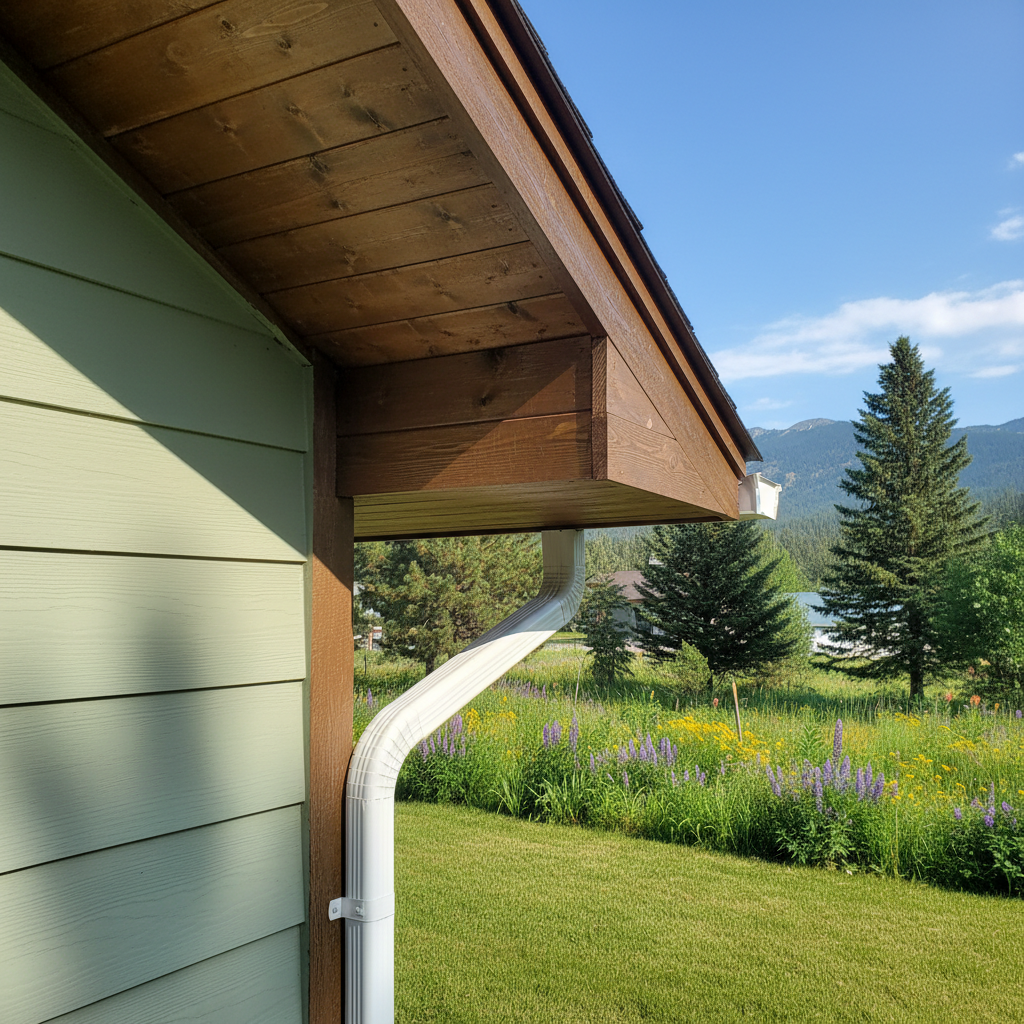
Your fascia boards really take a beating, especially here in Missoula with our heavy snow loads and those constant freeze-thaw cycles. They're not just for looks, you know; they actually protect your roofline and attic from water damage, pests, and all sorts of other headaches. When they start to rot or break down, you can't just ignore it. That problem will only get worse.
What Exactly Is Fascia, Anyway, and Why Should I Care?
Okay, let's start with the basics. Fascia is that long, straight board running horizontally right along the edge of your roof, exactly where your gutters attach. It's the trim piece that finishes off the look of your roof and eaves. But more importantly, it's the barrier between your attic and the outside world. It supports the bottom edge of your roof sheathing and gives your gutters a solid surface to fasten to. If your fascia feels soft, or it's cracked or rotting, your gutters won't stay put, and water will definitely start getting where it shouldn't.
Spotting the Damage: What to Keep an Eye Out For
You don't need to be a detective to find fascia damage. A lot of times, you can even see it from the ground. Look for things like:
- Peeling paint or discoloration: This usually means water is getting behind the paint.
- Soft spots: If you can reach it, give it a poke. If it feels spongy, you've got rot.
- Cracks or gaps: These are basically open invitations for water and critters to move in.
- Sagging gutters: If your gutters are pulling away from the house, there's a good chance the fascia behind them is compromised.
- Evidence of pests: Wasps, birds, and even bats love to nest in rotten fascia.
Our long Missoula winters, with snow piling up on roofs and then melting slowly, can really speed up this kind of damage. That constant moisture is just a killer for wood.
DIY Fixes: When You Can Probably Tackle It Yourself
Got small, isolated sections of damage? You might be able to handle it. Here's when I'd say it's a reasonable DIY project:
- Surface-level rot: If it's just the top layer of wood that's soft, and the board still feels solid, you can often scrape out the rot, treat the wood with a hardener, and then fill it with an exterior wood filler or epoxy. Sand it smooth, prime, and paint.
- Minor cracks or splits: These can usually be filled with a good quality exterior caulk or wood filler.
- Small, easily accessible sections: If it's a piece of fascia you can reach safely from a sturdy ladder without having to get too high or work in an awkward position, go for it.
Remember, safety first. A good, stable ladder is non-negotiable. Don't try to balance on anything wobbly. And if you're not comfortable with heights, seriously, just don't.
When to Call a Pro: Save Yourself the Headache (and Risk)
There are definitely times when trying to fix fascia yourself is just asking for trouble. This is where Omega Gutter Solutions comes in. You should absolutely call a professional if:
- Extensive rot: If the rot goes deep, affects long sections, or compromises the structural integrity of the fascia or surrounding roof components, you're looking at replacement, not just a simple repair. This often means removing gutters, possibly some roof decking, and replacing entire boards.
- Damage near the roofline or soffit: If the damage extends into the soffit or seems to be coming from a leaky roof, you've got a bigger problem than just the fascia itself. A professional can diagnose the root cause and fix it properly.
- High-up or hard-to-reach areas: Two-story homes, steep pitches, or areas over landscaping that make ladder placement tricky are best left to folks with the right equipment and experience. We've got the gear and the know-how to work safely and efficiently at height.
- You're not comfortable: If you're hesitant about heights, using power tools, or just aren't sure you're doing it right, don't push it. It's better to pay a professional than to risk injury or a shoddy repair that fails quickly.
- Gutters need replacing anyway: If your gutters are old and need replacing, it's the perfect time to address any fascia issues. We often find hidden damage once the old gutters are off, and it's much easier to fix it then.
The Repair Process: What Happens?
Whether you DIY or hire us, the basic steps are pretty similar:
- Inspection: We figure out how bad the damage really is.
- Preparation: This means removing any old paint, loose wood, and cleaning the area. If gutters are in the way, we'll need to temporarily remove or detach them.
- Repair/Replacement: For minor repairs, it's filling and sanding. For major damage, it's cutting out the rotten sections and replacing them with new, treated lumber. We always use materials designed for exterior use that can stand up to Missoula's weather.
- Protection: We prime all new or repaired wood, then paint it with a good quality exterior paint. This step is crucial for preventing future rot.
- Gutter Reinstallation: If gutters were removed, they'll need to be reinstalled securely.
Don't let damaged fascia become a bigger, more expensive problem down the line. A little attention now can save you a lot of grief. If you're unsure, or if the job looks bigger than you want to tackle, give us a call. We'll come out, take a look, and give you an honest assessment of what needs to be done.